Buy vernermotor.eu ?
We are moving the project
vernermotor.eu .
Are you interested in purchasing the domain
vernermotor.eu ?
domain@kv-gmbh.de · 0541-91531010
Buy vernermotor.eu ?
How do you calculate the resistance for an electric motor?
To calculate the resistance for an electric motor, you can use the formula R = V/I, where R is the resistance, V is the voltage across the motor, and I is the current flowing through the motor. You can measure the voltage using a voltmeter and the current using an ammeter. Once you have these values, you can use the formula to calculate the resistance of the motor. Keep in mind that the resistance of the motor may change with temperature and operating conditions, so it's important to take these factors into account when calculating the resistance. **
What is the difference between resistance and specific resistance?
Resistance is the opposition to the flow of electric current in a material, measured in ohms. It is a property of the material itself. Specific resistance, also known as resistivity, is a material property that quantifies how strongly a material opposes the flow of electric current. It is a characteristic of the material's composition and is used to calculate the resistance of a specific shape and size of material. **


Similar search terms for Resistance
Top-Angebote
Products related to Resistance:
-
Discount Dollar Deals Charger For Oral B Electric Toothbrush Replacement Base Adapter Magnetic, Efficient, Reliable, And Compatible us PlugKeep your Oral B iO Series Electric Toothbrush powered up and ready for use with this highquality replacement charger. Designed to perfectly fit and deliver reliable charging, this magnetic charger offers an efficient and hasslefree experience....64,97 $*Shipping: 0,00 $Secure redirect to the provider
-
Healfit Counter Upgrade Door Anchor Strap Resistance Bands Anchor Gym Attachment Portable Door Band Resistance Exercises Upgrade Door Anchor Strap Resistance Bands Anchor Gym Attachment Portable Door Band Resistance ExercisesTransform Your Home Workouts with the Best Door Anchor Strap Bring the gym anywhere you go. Our Upgrade Door Anchor Strap for Resistance Bands is engineered to elevate your home fitness routine with safety, convenience, and versatility. Ideal for...25,97 $*Shipping: 0,00 $Secure redirect to the provider
-
Shop Station Swim Training Belt With Resistance Cord Adjustable Neoprene Swimming Resistance Belt For Pool Training Swim Training Belt With Resistance Cord Adjustable Neoprene Swimming Resistance Belt For Pool TrainingExperience more effective swim workouts wherever you train with this swim training belt. Designed for swimmers of all skill levels, this adjustable swimming resistance belt helps improve endurance, technique, and power by allowing stationary swim...34,97 $*Shipping: 0,00 $Secure redirect to the provider




-
What is the difference between electrical resistance and specific resistance?
Electrical resistance is the opposition to the flow of electric current in a material, measured in ohms. It is a property of the material itself and is dependent on factors such as the material's dimensions and temperature. Specific resistance, on the other hand, is a material property that quantifies how much a material resists the flow of electric current compared to a standard material. It is also known as resistivity and is measured in ohm-meters. In essence, electrical resistance is the overall resistance of a material, while specific resistance is a more intrinsic property of the material itself. **
-
What are the tolerances for resistance chains and resistance cubes?
The tolerances for resistance chains and resistance cubes typically vary depending on the manufacturer and the specific product. However, in general, resistance chains and cubes are designed to have tight tolerances to ensure accurate and consistent resistance levels for users. It is common for resistance chains and cubes to have tolerances within a few percentage points to maintain their effectiveness and reliability during workouts. It is recommended to refer to the product specifications provided by the manufacturer for more detailed information on the tolerances of specific resistance chains and cubes. **
-
How do I calculate the resistance with the internal resistance?
To calculate the total resistance with the internal resistance, you can use the formula: R_total = R_internal + R_external, where R_total is the total resistance, R_internal is the internal resistance, and R_external is the external resistance. This formula takes into account the resistance from both the internal and external components of the circuit. By adding the internal and external resistances together, you can determine the total resistance in the circuit. **
-
What is the difference between insulation resistance and surface resistance?
Insulation resistance measures the resistance to the flow of current through the insulation material between two conductors, while surface resistance measures the resistance to the flow of current across the surface of a material. Insulation resistance is typically used to assess the effectiveness of insulation materials in preventing current leakage, while surface resistance is used to evaluate the cleanliness and conductivity of surfaces in electronic and electrical applications. In summary, insulation resistance measures the resistance through a material, while surface resistance measures the resistance across a material's surface. **

Is the protective resistance the same as the series resistance?
No, the protective resistance is not the same as the series resistance. The protective resistance is a component used to limit the current in a circuit and protect other components from damage. It is typically used in parallel with the component it is protecting. On the other hand, the series resistance is a component that is connected in series with other components in a circuit, affecting the overall resistance and current flow in the circuit. While both resistances are used to control current, they serve different purposes and are connected in different ways within a circuit. **
How can the individual resistance be determined from the total resistance?
The individual resistance can be determined from the total resistance by using the formula for resistors in parallel or in series. For resistors in parallel, the individual resistance can be found using the formula 1/R_total = 1/R1 + 1/R2 + 1/R3 + ... + 1/Rn, where R_total is the total resistance and R1, R2, R3, etc. are the individual resistances. For resistors in series, the individual resistance can be found by simply adding up the individual resistances to get the total resistance. Then, the individual resistance can be determined by subtracting the sum of the other resistances from the total resistance. **
Top-Angebote
Products related to Resistance:
-
Uplifted Goods Compact Twist Stepper With Resistance Bands blackUpgrade your home workouts with a space saving fitness solution. This twist stepper combines stepping and twisting motions to engage your lower body and core while resistance bands add upper body toning for a full workout experience. Key Features...144,97 $*Shipping: 0,00 $Secure redirect to the provider
-
Smart Shopping Spot Compact Vibration Platform With Resistance Bands For Full Body Home Workout Fitness Machine Compact Vibration Platform With Resistance Bands For Full Body Home Workout Fitness MachineFeel stronger, move better, and stay active without leaving home. This whole body vibration machine combines a compact vibration platform with resistance bands to support fullbody workouts in small spaces. Designed for busy professionals, beginners,...139,97 $*Shipping: 0,00 $Secure redirect to the provider
-
Discount Dollar Deals Charger For Oral B Electric Toothbrush Replacement Base Adapter Magnetic, Efficient, Reliable, And Compatible us PlugKeep your Oral B iO Series Electric Toothbrush powered up and ready for use with this highquality replacement charger. Designed to perfectly fit and deliver reliable charging, this magnetic charger offers an efficient and hasslefree experience....64,97 $*Shipping: 0,00 $Secure redirect to the provider
-
How do you calculate the resistance for an electric motor?
To calculate the resistance for an electric motor, you can use the formula R = V/I, where R is the resistance, V is the voltage across the motor, and I is the current flowing through the motor. You can measure the voltage using a voltmeter and the current using an ammeter. Once you have these values, you can use the formula to calculate the resistance of the motor. Keep in mind that the resistance of the motor may change with temperature and operating conditions, so it's important to take these factors into account when calculating the resistance. **
-
What is the difference between resistance and specific resistance?
Resistance is the opposition to the flow of electric current in a material, measured in ohms. It is a property of the material itself. Specific resistance, also known as resistivity, is a material property that quantifies how strongly a material opposes the flow of electric current. It is a characteristic of the material's composition and is used to calculate the resistance of a specific shape and size of material. **
-
What is the difference between electrical resistance and specific resistance?
Electrical resistance is the opposition to the flow of electric current in a material, measured in ohms. It is a property of the material itself and is dependent on factors such as the material's dimensions and temperature. Specific resistance, on the other hand, is a material property that quantifies how much a material resists the flow of electric current compared to a standard material. It is also known as resistivity and is measured in ohm-meters. In essence, electrical resistance is the overall resistance of a material, while specific resistance is a more intrinsic property of the material itself. **
-
What are the tolerances for resistance chains and resistance cubes?
The tolerances for resistance chains and resistance cubes typically vary depending on the manufacturer and the specific product. However, in general, resistance chains and cubes are designed to have tight tolerances to ensure accurate and consistent resistance levels for users. It is common for resistance chains and cubes to have tolerances within a few percentage points to maintain their effectiveness and reliability during workouts. It is recommended to refer to the product specifications provided by the manufacturer for more detailed information on the tolerances of specific resistance chains and cubes. **
Similar search terms for Resistance
-
Healfit Counter Upgrade Door Anchor Strap Resistance Bands Anchor Gym Attachment Portable Door Band Resistance Exercises Upgrade Door Anchor Strap Resistance Bands Anchor Gym Attachment Portable Door Band Resistance ExercisesTransform Your Home Workouts with the Best Door Anchor Strap Bring the gym anywhere you go. Our Upgrade Door Anchor Strap for Resistance Bands is engineered to elevate your home fitness routine with safety, convenience, and versatility. Ideal for...25,97 $*Shipping: 0,00 $Secure redirect to the provider
-
Shop Station Swim Training Belt With Resistance Cord Adjustable Neoprene Swimming Resistance Belt For Pool Training Swim Training Belt With Resistance Cord Adjustable Neoprene Swimming Resistance Belt For Pool TrainingExperience more effective swim workouts wherever you train with this swim training belt. Designed for swimmers of all skill levels, this adjustable swimming resistance belt helps improve endurance, technique, and power by allowing stationary swim...34,97 $*Shipping: 0,00 $Secure redirect to the provider
-
Peloton Resistance Band SetMade with high-grade natural rubber latex and premium aluminium handles the Peloton Resistance Band Set offers no-slip grip made from nylon cording and rubber effortlessly steps up your training. The set of three bands give light, medium and heavy resistance to match your training goals. Set of...54,00 £*Shipping: 4,95 £Secure redirect to the provider
-
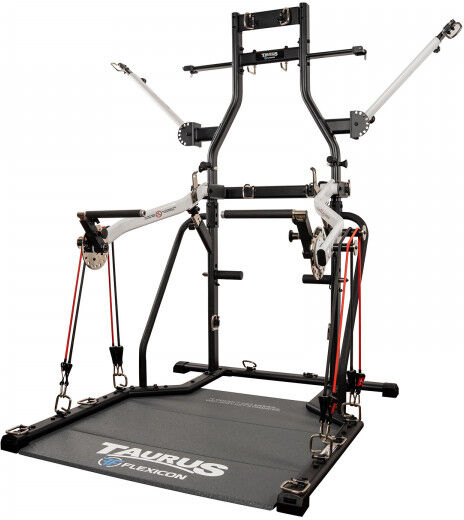
Taurus Flexicon Resistance TrainerUsing high-grade resistance bands to challenge your body, the Taurus Flexicon Resistance Trainer redefines how we approach strength training and resistance band training. The Resistance Trainer is a versatile platform powered by high-tension, patented resistance bands with carabiners to attach to...1349,10 £*Shipping: 0,00 £Secure redirect to the provider
-
How do I calculate the resistance with the internal resistance?
To calculate the total resistance with the internal resistance, you can use the formula: R_total = R_internal + R_external, where R_total is the total resistance, R_internal is the internal resistance, and R_external is the external resistance. This formula takes into account the resistance from both the internal and external components of the circuit. By adding the internal and external resistances together, you can determine the total resistance in the circuit. **
-
What is the difference between insulation resistance and surface resistance?
Insulation resistance measures the resistance to the flow of current through the insulation material between two conductors, while surface resistance measures the resistance to the flow of current across the surface of a material. Insulation resistance is typically used to assess the effectiveness of insulation materials in preventing current leakage, while surface resistance is used to evaluate the cleanliness and conductivity of surfaces in electronic and electrical applications. In summary, insulation resistance measures the resistance through a material, while surface resistance measures the resistance across a material's surface. **
-
Is the protective resistance the same as the series resistance?
No, the protective resistance is not the same as the series resistance. The protective resistance is a component used to limit the current in a circuit and protect other components from damage. It is typically used in parallel with the component it is protecting. On the other hand, the series resistance is a component that is connected in series with other components in a circuit, affecting the overall resistance and current flow in the circuit. While both resistances are used to control current, they serve different purposes and are connected in different ways within a circuit. **
-
How can the individual resistance be determined from the total resistance?
The individual resistance can be determined from the total resistance by using the formula for resistors in parallel or in series. For resistors in parallel, the individual resistance can be found using the formula 1/R_total = 1/R1 + 1/R2 + 1/R3 + ... + 1/Rn, where R_total is the total resistance and R1, R2, R3, etc. are the individual resistances. For resistors in series, the individual resistance can be found by simply adding up the individual resistances to get the total resistance. Then, the individual resistance can be determined by subtracting the sum of the other resistances from the total resistance. **
* All prices are inclusive of VAT and, if applicable, plus shipping costs. The offer information is based on the details provided by the respective shop and is updated through automated processes. Real-time updates do not occur, so deviations can occur in individual cases. ** Note: Parts of this content were created by AI.