Buy vernermotor.eu ?
We are moving the project
vernermotor.eu .
Are you interested in purchasing the domain
vernermotor.eu ?
domain@kv-gmbh.de · 0541-91531010
Buy vernermotor.eu ?
Are photons electrons?
No, photons are not electrons. Photons are elementary particles that make up light and electromagnetic radiation, while electrons are negatively charged subatomic particles that are part of atoms. Photons have no mass and travel at the speed of light, while electrons have mass and are bound to the nucleus of an atom. **
What happens to photons?
Photons are elementary particles that make up light. They do not have mass and travel at the speed of light. When photons interact with matter, they can be absorbed, reflected, or transmitted. Absorption of photons can result in the excitation of electrons, leading to various physical and chemical processes. **


Similar search terms for Photons
Top-Angebote
Products related to Photons:
-
Brentwood Electric Powerful 80 Watt Citrus Juicer in BlackUse the 80w J-26BK Powerful Electric Citrus Juicer to produce healthy and fresh homemade juice from all your favorite citrus fruits. We've included small and large squeezing cones for fruits including oranges, lemons, limes, grapefruits, and more.47,99 $*Shipping: 0,00 $Secure redirect to the provider
-
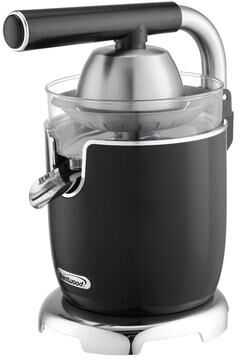
Brentwood Electric Powerful 200 Watt Citrus Juicer in BlackUse the Powerful 200W Electric Citrus Juicer to produce healthy and fresh homemade juice from all your favorite citrus fruits. We've included small and large squeezing cones for fruits including oranges, lemons, limes, grapefruits, and more.56,49 $*Shipping: 0,00 $Secure redirect to the provider



-
How are photons created?
Photons are created through a process called electromagnetic radiation. This occurs when an atom absorbs energy, causing its electrons to move to a higher energy level. When the electrons return to their original energy level, they release the absorbed energy in the form of photons. This process can happen in various ways, such as through thermal radiation, chemical reactions, or nuclear reactions. **
-
How can one convert the energy of different photons into monochromatic photons?
One way to convert the energy of different photons into monochromatic photons is through a process called frequency doubling or second harmonic generation. This involves passing the photons through a nonlinear crystal, which causes the photons to combine and create new photons with double the frequency and half the wavelength of the original photons. This results in monochromatic photons with a single, specific wavelength. Another method is through the use of filters or monochromators, which can selectively filter out photons of specific wavelengths, allowing only monochromatic photons to pass through. **
-
How can photons have mass?
Photons are massless particles according to the Standard Model of particle physics. They travel at the speed of light and have zero rest mass. However, in certain theoretical models beyond the Standard Model, such as some versions of string theory, it is possible for photons to acquire a small amount of mass through interactions with other particles or fields. This mass is typically very small and has not been experimentally observed. **
-
How far do photons travel?
Photons, as particles of light, travel at the speed of light in a vacuum, which is approximately 299,792 kilometers per second. This means that photons can travel vast distances in a very short amount of time. However, their travel distance can be affected by factors such as absorption, reflection, and scattering, which can cause them to be absorbed or redirected before reaching their destination. **

What distinguishes photons and protons?
Photons are elementary particles that carry electromagnetic radiation, such as light, while protons are subatomic particles found in the nucleus of an atom. Photons have no mass and travel at the speed of light, while protons have mass and are composed of quarks. Additionally, photons do not have an electric charge, while protons have a positive electric charge. **
Why can photons penetrate matter?
Photons can penetrate matter because they do not have an electric charge and are not affected by electromagnetic forces within the material. Additionally, photons do not have mass, allowing them to travel at the speed of light and pass through matter without being absorbed or deflected. This property of photons enables them to interact with atoms and molecules in the material, leading to phenomena such as absorption, reflection, and transmission. **
Top-Angebote
Products related to Photons:
-
Discount Dollar Deals Charger For Oral B Electric Toothbrush Replacement Base Adapter Magnetic, Efficient, Reliable, And Compatible us PlugKeep your Oral B iO Series Electric Toothbrush powered up and ready for use with this highquality replacement charger. Designed to perfectly fit and deliver reliable charging, this magnetic charger offers an efficient and hasslefree experience....64,97 $*Shipping: 0,00 $Secure redirect to the provider
-
eufy Fabric Cleaning Brush, Powerful Suction, Efficient Cleaning, Durable, Compatible with E28Compatible with eufy Robot Vacuum Omni E28. Effectively cleans your carpet and fabric furniture with powerful suction and high durability. Easy to replace—no tools needed. Note: To protect your robot vacuum and extend its lifespan, we recommend...16,99 $*Shipping: 0,00 $Secure redirect to the provider
-
Are photons electrons?
No, photons are not electrons. Photons are elementary particles that make up light and electromagnetic radiation, while electrons are negatively charged subatomic particles that are part of atoms. Photons have no mass and travel at the speed of light, while electrons have mass and are bound to the nucleus of an atom. **
-
What happens to photons?
Photons are elementary particles that make up light. They do not have mass and travel at the speed of light. When photons interact with matter, they can be absorbed, reflected, or transmitted. Absorption of photons can result in the excitation of electrons, leading to various physical and chemical processes. **
-
How are photons created?
Photons are created through a process called electromagnetic radiation. This occurs when an atom absorbs energy, causing its electrons to move to a higher energy level. When the electrons return to their original energy level, they release the absorbed energy in the form of photons. This process can happen in various ways, such as through thermal radiation, chemical reactions, or nuclear reactions. **
-
How can one convert the energy of different photons into monochromatic photons?
One way to convert the energy of different photons into monochromatic photons is through a process called frequency doubling or second harmonic generation. This involves passing the photons through a nonlinear crystal, which causes the photons to combine and create new photons with double the frequency and half the wavelength of the original photons. This results in monochromatic photons with a single, specific wavelength. Another method is through the use of filters or monochromators, which can selectively filter out photons of specific wavelengths, allowing only monochromatic photons to pass through. **
Similar search terms for Photons
-
Brentwood Electric Powerful 80 Watt Citrus Juicer in BlackUse the 80w J-26BK Powerful Electric Citrus Juicer to produce healthy and fresh homemade juice from all your favorite citrus fruits. We've included small and large squeezing cones for fruits including oranges, lemons, limes, grapefruits, and more.47,99 $*Shipping: 0,00 $Secure redirect to the provider
-
Brentwood Electric Powerful 200 Watt Citrus Juicer in BlackUse the Powerful 200W Electric Citrus Juicer to produce healthy and fresh homemade juice from all your favorite citrus fruits. We've included small and large squeezing cones for fruits including oranges, lemons, limes, grapefruits, and more.56,49 $*Shipping: 0,00 $Secure redirect to the provider
-
Oase OptiMax 5000 Aquarium Pump – Compact, Efficient, and Silent Water Circulation, NewThe Oase OptiMax 5000 Aquarium Pump delivers powerful and reliable water circulation for medium to large aquariums, ensuring optimal oxygenation and a healthy aquatic environment. Built with German engineering , it offers exceptional performance, energy efficiency, and near-silent operation — making it ideal for both freshwater and marine setups. Designed for versatility and durability, the OptiMax 5000 is perfect for continuous use in filtration systems, decorative water features, or as a circulation pump in aquariums and aquascapes. Powerful 5000 L/h flow rate – provides effective water movement and filtration for clear, healthy water. Energy-efficient design – achieves strong performance with minimal power consumption. Extremely quiet operation – ideal for living spaces and indoor aquariums. Compact and robust construction – fits easily into tight spaces within tanks or filter systems. Adjustable flow control – allows precise regulation of water circulation to suit your setup. Versatile use – suitable for both freshwater and saltwater aquariums, as well as indoor water features. Reliable German engineering – built for long-term performance and continuous operation. Safe and easy to maintain – detachable components for effortless cleaning and maintenance. Can be used submerged or externally – adaptable for multiple configurations. The Oase OptiMax 5000 is a high-performance, energy-efficient solution designed to maintain crystal-clear water and optimal circulation — perfect for aquarists who prioritise reliability, quietness, and professional quality. Specification Details Model Oase OptiMax 5000 Type Aquarium / Circulation Pump Maximum Flow Rate 5000 L/h Max Head Height Approx. 3.5 m Power Consumption 85 W Voltage 230 V / 50 Hz Control Adjustable Flow Installation Type Submersible or External Suitable For Freshwater & Saltwater Aquariums Dimensions Approx. 182 × 102 × 120 mm Weight Approx. 1.5 kg Noise Level Extremely Quiet Operation Material Durable, corrosion-resistant housing Cable Length Approx. 2.5 m Country of Origin Germany99,99 £*Shipping: 0,00 £Secure redirect to the provider
-
How can photons have mass?
Photons are massless particles according to the Standard Model of particle physics. They travel at the speed of light and have zero rest mass. However, in certain theoretical models beyond the Standard Model, such as some versions of string theory, it is possible for photons to acquire a small amount of mass through interactions with other particles or fields. This mass is typically very small and has not been experimentally observed. **
-
How far do photons travel?
Photons, as particles of light, travel at the speed of light in a vacuum, which is approximately 299,792 kilometers per second. This means that photons can travel vast distances in a very short amount of time. However, their travel distance can be affected by factors such as absorption, reflection, and scattering, which can cause them to be absorbed or redirected before reaching their destination. **
-
What distinguishes photons and protons?
Photons are elementary particles that carry electromagnetic radiation, such as light, while protons are subatomic particles found in the nucleus of an atom. Photons have no mass and travel at the speed of light, while protons have mass and are composed of quarks. Additionally, photons do not have an electric charge, while protons have a positive electric charge. **
-
Why can photons penetrate matter?
Photons can penetrate matter because they do not have an electric charge and are not affected by electromagnetic forces within the material. Additionally, photons do not have mass, allowing them to travel at the speed of light and pass through matter without being absorbed or deflected. This property of photons enables them to interact with atoms and molecules in the material, leading to phenomena such as absorption, reflection, and transmission. **
* All prices are inclusive of VAT and, if applicable, plus shipping costs. The offer information is based on the details provided by the respective shop and is updated through automated processes. Real-time updates do not occur, so deviations can occur in individual cases. ** Note: Parts of this content were created by AI.