Buy vernermotor.eu ?
We are moving the project
vernermotor.eu .
Are you interested in purchasing the domain
vernermotor.eu ?
domain@kv-gmbh.de · 0541-91531010
Buy vernermotor.eu ?
How many bytes does the WLAN send if it receives 2,000,000 bytes but sends 64,000,000 bytes?
If the WLAN receives 2,000,000 bytes but sends 64,000,000 bytes, the total number of bytes sent and received would be 66,000,000 bytes. This is because the WLAN is both receiving and sending data. **
What are numbers and bytes?
Numbers are mathematical entities used to quantify and count objects or events. They can be integers, fractions, decimals, or irrational numbers. Bytes, on the other hand, are units of digital information that consist of 8 bits. They are used to represent characters, numbers, and other data in computer systems. Bytes are the basic building blocks of digital information storage and processing. **


Similar search terms for Bytes
Top-Angebote
Products related to Bytes:
-
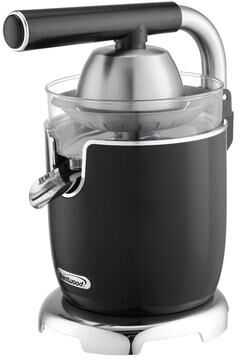
Brentwood Electric Powerful 80 Watt Citrus Juicer in BlackUse the 80w J-26BK Powerful Electric Citrus Juicer to produce healthy and fresh homemade juice from all your favorite citrus fruits. We've included small and large squeezing cones for fruits including oranges, lemons, limes, grapefruits, and more.47,99 $*Shipping: 0,00 $Secure redirect to the provider
-
Brentwood Electric Powerful 200 Watt Citrus Juicer in BlackUse the Powerful 200W Electric Citrus Juicer to produce healthy and fresh homemade juice from all your favorite citrus fruits. We've included small and large squeezing cones for fruits including oranges, lemons, limes, grapefruits, and more.56,49 $*Shipping: 0,00 $Secure redirect to the provider



-
What are bits and bytes?
Bits and bytes are units of digital information used in computing. A bit is the smallest unit of data and can have a value of either 0 or 1. A byte is a group of 8 bits, and it is the standard unit for measuring data storage and transmission. Bytes are used to represent characters, numbers, and other types of data in computer systems. **
-
Why did we add 4 bytes?
We added 4 bytes because we needed to increase the memory allocation for the data structure in order to accommodate additional information or larger values. By adding 4 bytes, we are able to store more data and ensure that the structure can handle the necessary information without running into memory overflow issues. This extra space allows for flexibility and scalability in the data structure, making it more robust and capable of handling a wider range of data inputs. **
-
Receives bytes, but sends very few?
A device that receives bytes but sends very few could be a sensor. Sensors are designed to detect and collect data from their environment, such as temperature, pressure, or motion, and then transmit that data to a central processing unit or controller. However, sensors typically only send small amounts of data at specific intervals, as they are not designed for continuous or high-volume data transmission. This makes them efficient for monitoring and collecting data without overwhelming the network with unnecessary traffic. **
-
Why can't I add bytes in Java?
In Java, bytes are considered primitive data types and do not have built-in methods for addition like other numeric data types such as integers or doubles. To add bytes in Java, you would need to first convert them to a larger data type such as integers, perform the addition, and then convert the result back to a byte. This extra step is required because bytes are limited to a range of -128 to 127, and adding two bytes could potentially result in a value outside of this range. **

How do you convert bits to bytes?
To convert bits to bytes, you need to divide the number of bits by 8. Since there are 8 bits in a byte, dividing the total number of bits by 8 will give you the equivalent number of bytes. For example, if you have 64 bits, dividing by 8 would give you 8 bytes. This conversion is important when dealing with data storage and transmission, as bytes are commonly used to represent file sizes and data transfer rates. **
How many bytes does a color code have?
A color code typically consists of 3 bytes, representing the red, green, and blue components of a color. Each byte ranges from 0 to 255, allowing for a total of 16,777,216 possible color combinations (256^3). This is known as the RGB color model, which is commonly used in digital displays and graphics. **
Top-Angebote
Products related to Bytes:
-
Discount Dollar Deals Charger For Oral B Electric Toothbrush Replacement Base Adapter Magnetic, Efficient, Reliable, And Compatible us PlugKeep your Oral B iO Series Electric Toothbrush powered up and ready for use with this highquality replacement charger. Designed to perfectly fit and deliver reliable charging, this magnetic charger offers an efficient and hasslefree experience....64,97 $*Shipping: 0,00 $Secure redirect to the provider
-
eufy Fabric Cleaning Brush, Powerful Suction, Efficient Cleaning, Durable, Compatible with E28Compatible with eufy Robot Vacuum Omni E28. Effectively cleans your carpet and fabric furniture with powerful suction and high durability. Easy to replace—no tools needed. Note: To protect your robot vacuum and extend its lifespan, we recommend...12,75 $*Shipping: 0,00 $Secure redirect to the provider
-
How many bytes does the WLAN send if it receives 2,000,000 bytes but sends 64,000,000 bytes?
If the WLAN receives 2,000,000 bytes but sends 64,000,000 bytes, the total number of bytes sent and received would be 66,000,000 bytes. This is because the WLAN is both receiving and sending data. **
-
What are numbers and bytes?
Numbers are mathematical entities used to quantify and count objects or events. They can be integers, fractions, decimals, or irrational numbers. Bytes, on the other hand, are units of digital information that consist of 8 bits. They are used to represent characters, numbers, and other data in computer systems. Bytes are the basic building blocks of digital information storage and processing. **
-
What are bits and bytes?
Bits and bytes are units of digital information used in computing. A bit is the smallest unit of data and can have a value of either 0 or 1. A byte is a group of 8 bits, and it is the standard unit for measuring data storage and transmission. Bytes are used to represent characters, numbers, and other types of data in computer systems. **
-
Why did we add 4 bytes?
We added 4 bytes because we needed to increase the memory allocation for the data structure in order to accommodate additional information or larger values. By adding 4 bytes, we are able to store more data and ensure that the structure can handle the necessary information without running into memory overflow issues. This extra space allows for flexibility and scalability in the data structure, making it more robust and capable of handling a wider range of data inputs. **
Similar search terms for Bytes
-
Brentwood Electric Powerful 80 Watt Citrus Juicer in BlackUse the 80w J-26BK Powerful Electric Citrus Juicer to produce healthy and fresh homemade juice from all your favorite citrus fruits. We've included small and large squeezing cones for fruits including oranges, lemons, limes, grapefruits, and more.47,99 $*Shipping: 0,00 $Secure redirect to the provider
-
Brentwood Electric Powerful 200 Watt Citrus Juicer in BlackUse the Powerful 200W Electric Citrus Juicer to produce healthy and fresh homemade juice from all your favorite citrus fruits. We've included small and large squeezing cones for fruits including oranges, lemons, limes, grapefruits, and more.56,49 $*Shipping: 0,00 $Secure redirect to the provider
-
Oase OptiMax 5000 Aquarium Pump – Compact, Efficient, and Silent Water Circulation, NewThe Oase OptiMax 5000 Aquarium Pump delivers powerful and reliable water circulation for medium to large aquariums, ensuring optimal oxygenation and a healthy aquatic environment. Built with German engineering , it offers exceptional performance, energy efficiency, and near-silent operation — making it ideal for both freshwater and marine setups. Designed for versatility and durability, the OptiMax 5000 is perfect for continuous use in filtration systems, decorative water features, or as a circulation pump in aquariums and aquascapes. Powerful 5000 L/h flow rate – provides effective water movement and filtration for clear, healthy water. Energy-efficient design – achieves strong performance with minimal power consumption. Extremely quiet operation – ideal for living spaces and indoor aquariums. Compact and robust construction – fits easily into tight spaces within tanks or filter systems. Adjustable flow control – allows precise regulation of water circulation to suit your setup. Versatile use – suitable for both freshwater and saltwater aquariums, as well as indoor water features. Reliable German engineering – built for long-term performance and continuous operation. Safe and easy to maintain – detachable components for effortless cleaning and maintenance. Can be used submerged or externally – adaptable for multiple configurations. The Oase OptiMax 5000 is a high-performance, energy-efficient solution designed to maintain crystal-clear water and optimal circulation — perfect for aquarists who prioritise reliability, quietness, and professional quality. Specification Details Model Oase OptiMax 5000 Type Aquarium / Circulation Pump Maximum Flow Rate 5000 L/h Max Head Height Approx. 3.5 m Power Consumption 85 W Voltage 230 V / 50 Hz Control Adjustable Flow Installation Type Submersible or External Suitable For Freshwater & Saltwater Aquariums Dimensions Approx. 182 × 102 × 120 mm Weight Approx. 1.5 kg Noise Level Extremely Quiet Operation Material Durable, corrosion-resistant housing Cable Length Approx. 2.5 m Country of Origin Germany99,99 £*Shipping: 0,00 £Secure redirect to the provider
-
Receives bytes, but sends very few?
A device that receives bytes but sends very few could be a sensor. Sensors are designed to detect and collect data from their environment, such as temperature, pressure, or motion, and then transmit that data to a central processing unit or controller. However, sensors typically only send small amounts of data at specific intervals, as they are not designed for continuous or high-volume data transmission. This makes them efficient for monitoring and collecting data without overwhelming the network with unnecessary traffic. **
-
Why can't I add bytes in Java?
In Java, bytes are considered primitive data types and do not have built-in methods for addition like other numeric data types such as integers or doubles. To add bytes in Java, you would need to first convert them to a larger data type such as integers, perform the addition, and then convert the result back to a byte. This extra step is required because bytes are limited to a range of -128 to 127, and adding two bytes could potentially result in a value outside of this range. **
-
How do you convert bits to bytes?
To convert bits to bytes, you need to divide the number of bits by 8. Since there are 8 bits in a byte, dividing the total number of bits by 8 will give you the equivalent number of bytes. For example, if you have 64 bits, dividing by 8 would give you 8 bytes. This conversion is important when dealing with data storage and transmission, as bytes are commonly used to represent file sizes and data transfer rates. **
-
How many bytes does a color code have?
A color code typically consists of 3 bytes, representing the red, green, and blue components of a color. Each byte ranges from 0 to 255, allowing for a total of 16,777,216 possible color combinations (256^3). This is known as the RGB color model, which is commonly used in digital displays and graphics. **
* All prices are inclusive of VAT and, if applicable, plus shipping costs. The offer information is based on the details provided by the respective shop and is updated through automated processes. Real-time updates do not occur, so deviations can occur in individual cases. ** Note: Parts of this content were created by AI.